Post of Honor of War test game
Today I had a test game at a home rule for Post of Honour and Honours of War, by Keith Flint, which I plan to adopt, to play Seven Years War games. I call it “Post of Honour of War”. It is essentially using the Post Of Honour game mechanics, using some parts from Honours of war, like the national differences, the initiative mechanism, the fire ranges. I have also added some additional morale conditions, different size units, which allow me to play a game closer to what I read about units behaviour during the roughly 1740-1760 period.
The use of prepared built-up areas is a mechanics I wished to add. What I read describes the fire from villages and built up areas in general very bas, unless a clean field of fire, a glacis, is prepared in advance.
Also, I like the home rules that in some conditions, the infantrymen from units firing or in cover did not follow the orders given by officers to go forward. They in fact kept firing and if in cover they also took some shelter. For this reason the rule that formed units can claim only hard cover is violated in case the unit stops due to morale and takes some soft cover, eventually firing back.
This same rule also allows units advancing without firing, to avoid stopping and engage in a fire fight due to a morale drop, in game terms going to an Uneasy morale state. In this way the order that Frederick game at the begiinigm of the war, to advance without firing, make a little more sense since the unit reaching the Uneasyt state will continue to advance forward. This still does not justify Frederick idea, since a unit that does not fire back will accumulate casualties that eventually will make it, in game terms, disadvantaged in combat or weakened and stopped before trying to contact the enemy.
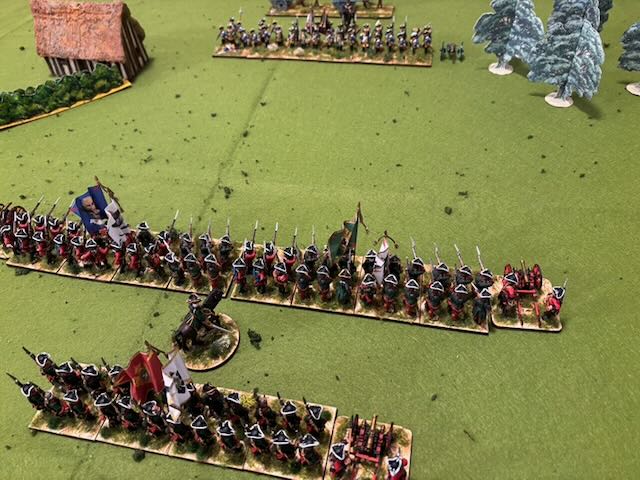
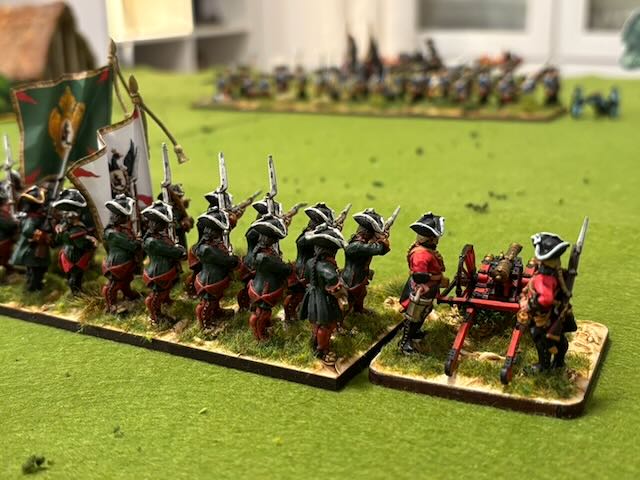
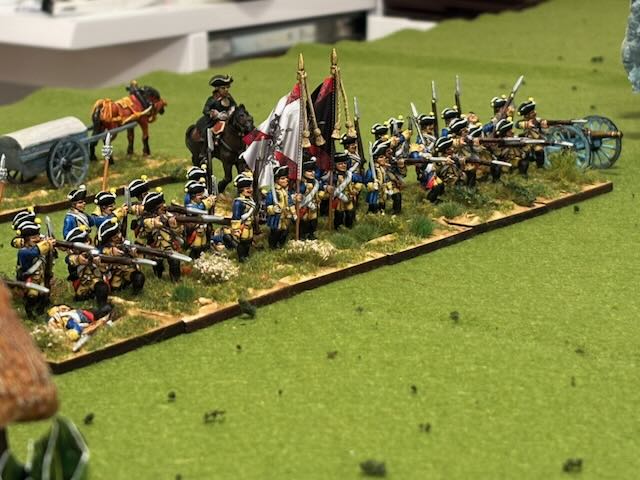
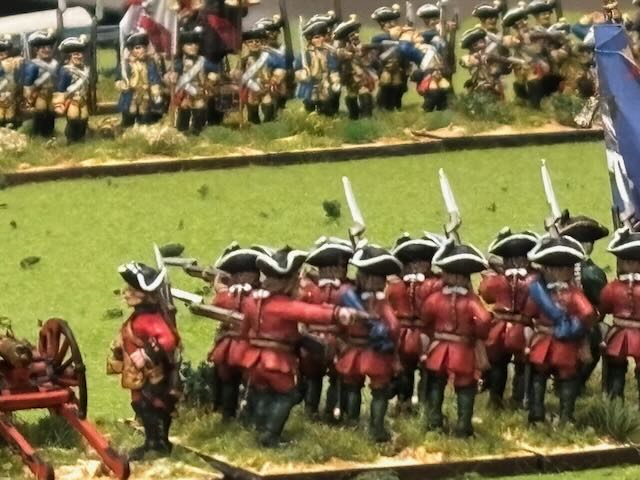
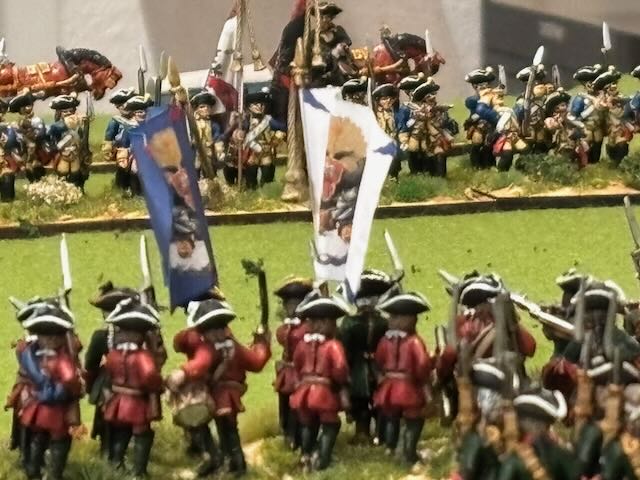
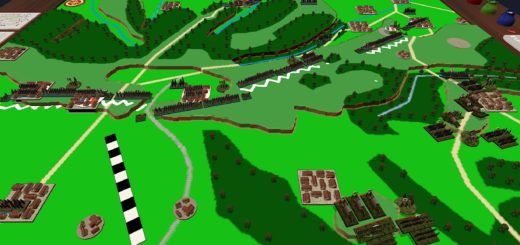
Here some photos, where I tried many times the same combat situation, where there russian infantry battalions attack a single superior or regular prussian large battalion, or two small regular battalions. In many cases the superior large battalion managed to stop the advance, with some luck. The two small regular battalions usually succumbed under the pressure of three standard regular russians.
I have prepared a quick sheet containing all the amendments to the excellent rules designed by Keith Flint. The two rulesets in fact play very well just as they are, my home rules are not really needed to solve particular issues, they are just my fancy.